
Our new timeline panel introduces independent, dual-track versioning for materials, giving you complete control over supplier specs, lifecycle actions, and customizable org metadata.
In digital material management, version control is how you govern material development and multi-brand workflows. As a material moves from initial sample to production, technical properties constantly evolve. At the same time, your team attaches its own operational context to that material.
This configurable Org Metadata layer allows teams to manage brand-specific terms like negotiated pricing, MOQs, and lead times, as well as internal IDs or exact physical sample locations (such as "Building A, Level 5, Shelf 60").
When a supplier updates a weave or weight during active development, your brand's custom metadata shouldn't be forced into a new version. Likewise, when your team logs a new sample location or negotiated term, the supplier's core material spec shouldn't falsely register as changed.
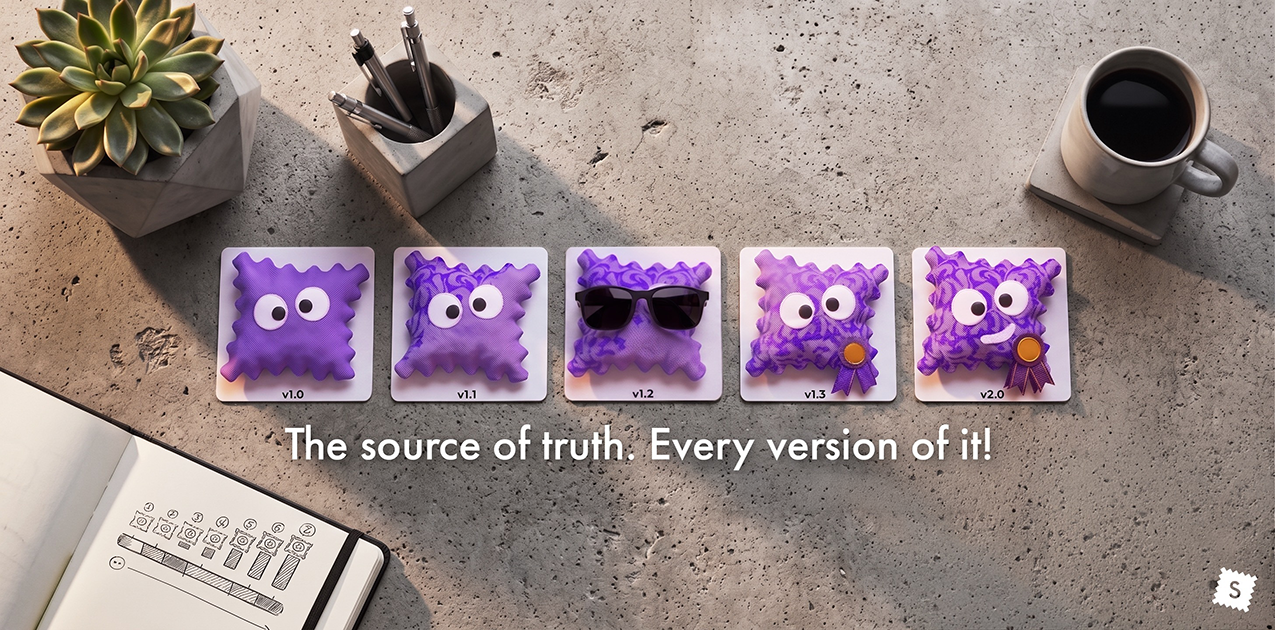
Our new Dual-Track Timeline Panel solves this by separating physical material development from custom org metadata and lifecycle actions into two independently navigable tracks. The result? Total clarity on who versioned what, and when - delivering the source of truth, every version of it.
.png)
"The two tracks operate independently because they represent independently governed data," says Yazan Malkosh, Founder of swatchbook and Head of Business at CLO. "You can scrub through your organization’s metadata and sharing history while keeping the physical material version locked."
Dual-track versioning is immediately available across web and desktop. Open any material in your workspace to take control of your dual history!
swatchbook, a CLO Virtual Fashion company, is a design and software company that develops applications that make you smile. Founded in 2017 and headquartered in Irvine, CA, swatchbook focuses on cloud, desktop, and mobile applications that digitize material workflows and integrate creative teams into the product development process. As part of CLO Virtual Fashion, swatchbook continues to push the boundaries of material management, sourcing, and 3D visualization for the global apparel, footwear, and fashion industries.
Press contact: team@swatchbook.us
Our new timeline panel introduces independent, dual-track versioning for materials, giving you complete control over supplier specs, lifecycle actions, and customizable org metadata.
In digital material management, version control is how you govern material development and multi-brand workflows. As a material moves from initial sample to production, technical properties constantly evolve. At the same time, your team attaches its own operational context to that material.
This configurable Org Metadata layer allows teams to manage brand-specific terms like negotiated pricing, MOQs, and lead times, as well as internal IDs or exact physical sample locations (such as "Building A, Level 5, Shelf 60").
When a supplier updates a weave or weight during active development, your brand's custom metadata shouldn't be forced into a new version. Likewise, when your team logs a new sample location or negotiated term, the supplier's core material spec shouldn't falsely register as changed.
Our new Dual-Track Timeline Panel solves this by separating physical material development from custom org metadata and lifecycle actions into two independently navigable tracks. The result? Total clarity on who versioned what, and when - delivering the source of truth, every version of it.
"The two tracks operate independently because they represent independently governed data," says Yazan Malkosh, Founder of swatchbook and Head of Business at CLO. "You can scrub through your organization’s metadata and sharing history while keeping the physical material version locked."
Dual-track versioning is immediately available across web and desktop. Open any material in your workspace to take control of your dual history!
swatchbook, a CLO Virtual Fashion company, is a design and software company that develops applications that make you smile. Founded in 2017 and headquartered in Irvine, CA, swatchbook focuses on cloud, desktop, and mobile applications that digitize material workflows and integrate creative teams into the product development process. As part of CLO Virtual Fashion, swatchbook continues to push the boundaries of material management, sourcing, and 3D visualization for the global apparel, footwear, and fashion industries.
Press contact: team@swatchbook.us